A retro instrument cluster for the wall iPad
There’s an iPad on the wall that shows the house. I replaced the Lovelace dashboard on it with a retro CRT instrument cluster, the Pip-Boy kind of thing, written as its own small app.
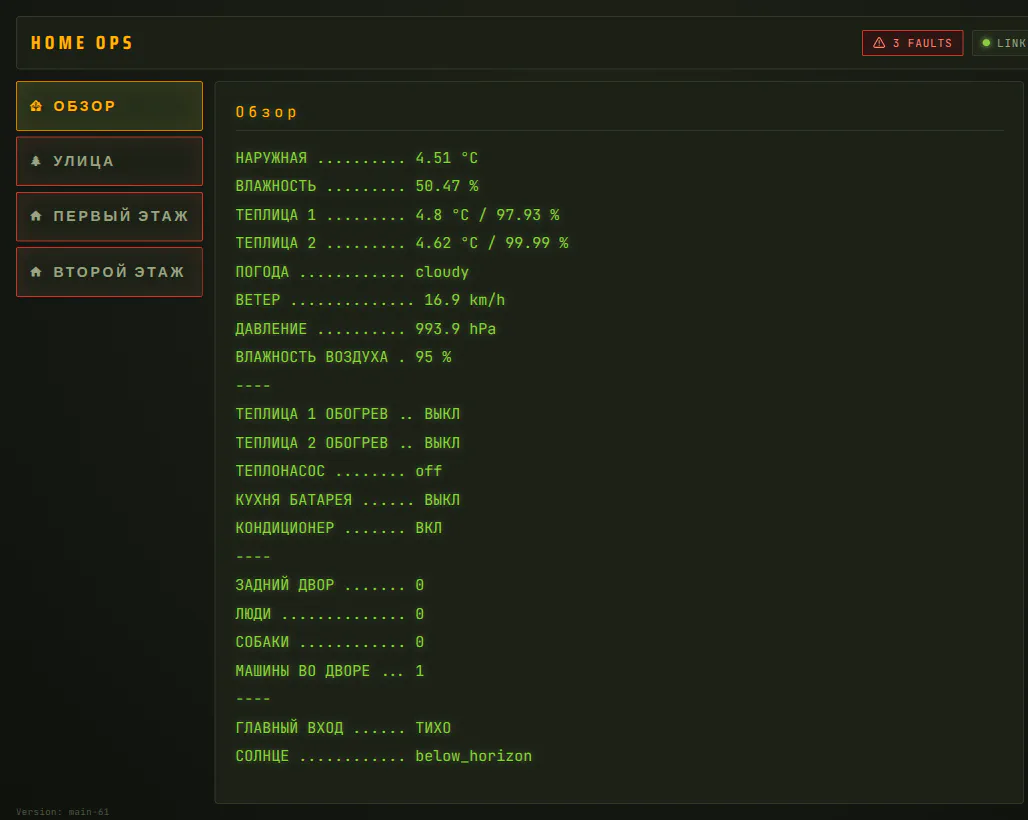
The live overview page. The interface is in Russian, since it’s what the family reads. The strip of camera thumbnails on the right is cropped out of this picture.
How it works
It isn’t a Lovelace card. A single Go process holds a WebSocket connection to Home Assistant, keeps a live copy of the state, and serves a server-rendered page. A thin layer of JavaScript patches the page over the HUD’s own WebSocket whenever something changes, so the page updates live. If the connection to Home Assistant drops, the backend retries with a growing delay, capped at 30 seconds.
It runs in the cluster from a small Helm chart.
Things I like
- Recent things glow. An event keeps its tile lit for ten minutes and goes into a bell log, so you can see what just happened without staring.
- Camera alerts are based on person detection rather than raw motion.
- It dims after five idle minutes.
- Counter cards for things like the number of cars in the driveway.
The newline that broke everything
When the Home Assistant access token was loaded from a file, a trailing newline came along with it, and every request to Home Assistant failed. The fix is to put the token into the Kubernetes secret without the newline, and the repo’s notes now say so.
How it was made
It was built in Claude Code sessions, starting from a written design spec and an implementation plan. The repo has a file that tells a fresh session how to find the plan, the tracker and the deploy steps, because no session remembers the last one.
Loading comments…